• Home
  • About Us
    • The Founding Felines
    • Mouse
    • Gingerpaw
    • Sox
    • Hope
    • Sylvester
    • Timtim
    • BB Ginga
    • Tabitha
    • Biscuit
  • ......
    • A4 Single Prints (Portrait)
    • A6 Greeting Cards
    • A4 Single Prints (Landscape)
    • Artists Process
  • ......
    • Diesel
    • Vinnie
    • Tippy
    • Dennis
  • .....
    • Sponsor a Cat
    • Donations
  • Supporters
  • Adoptions
  • Blog

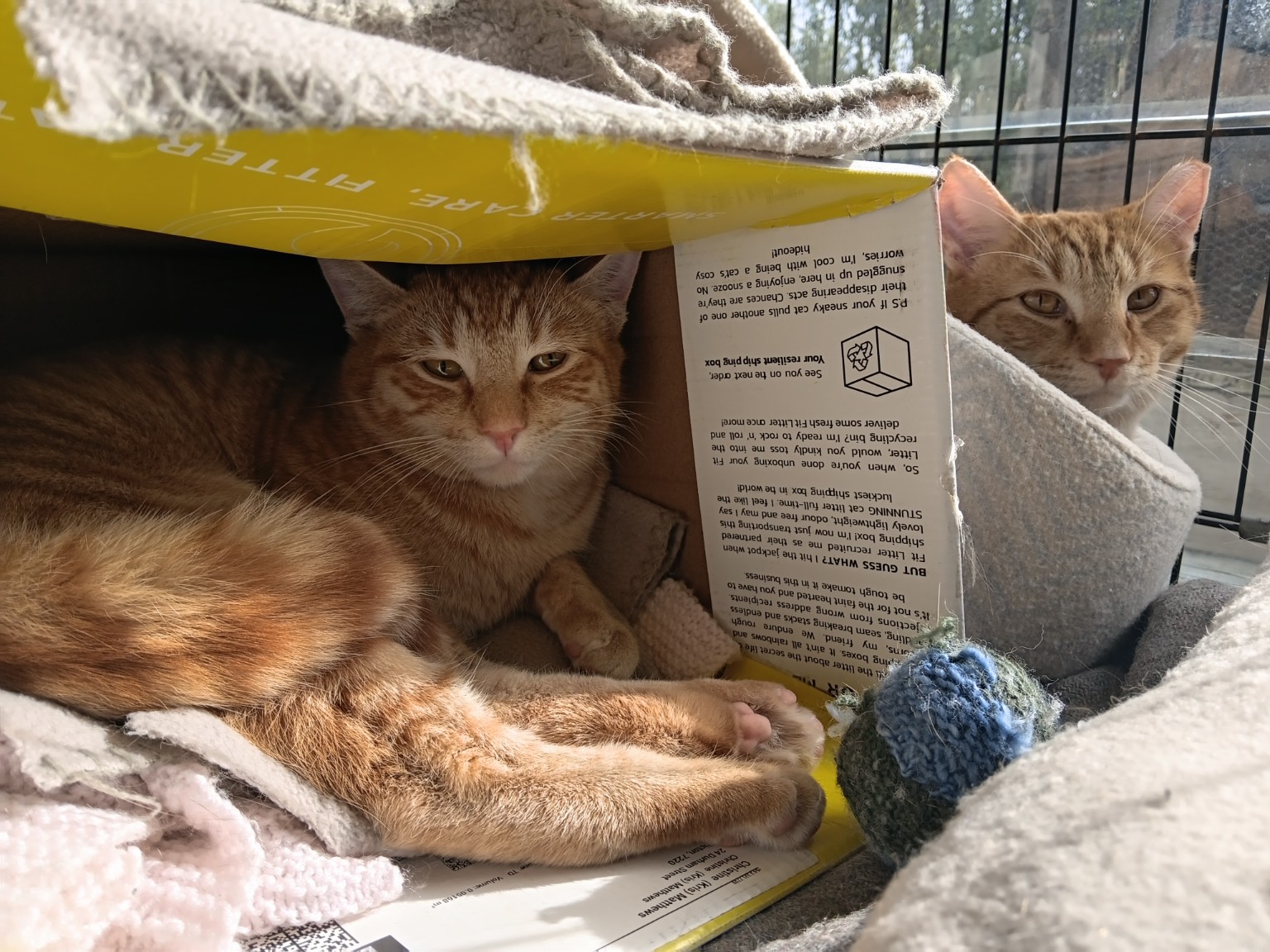
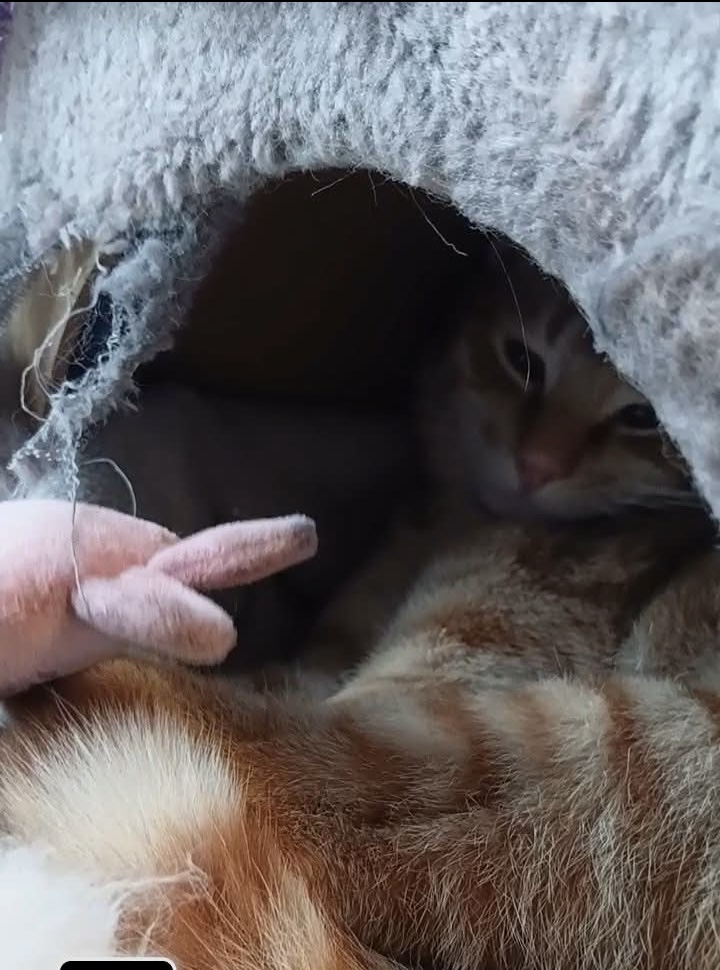
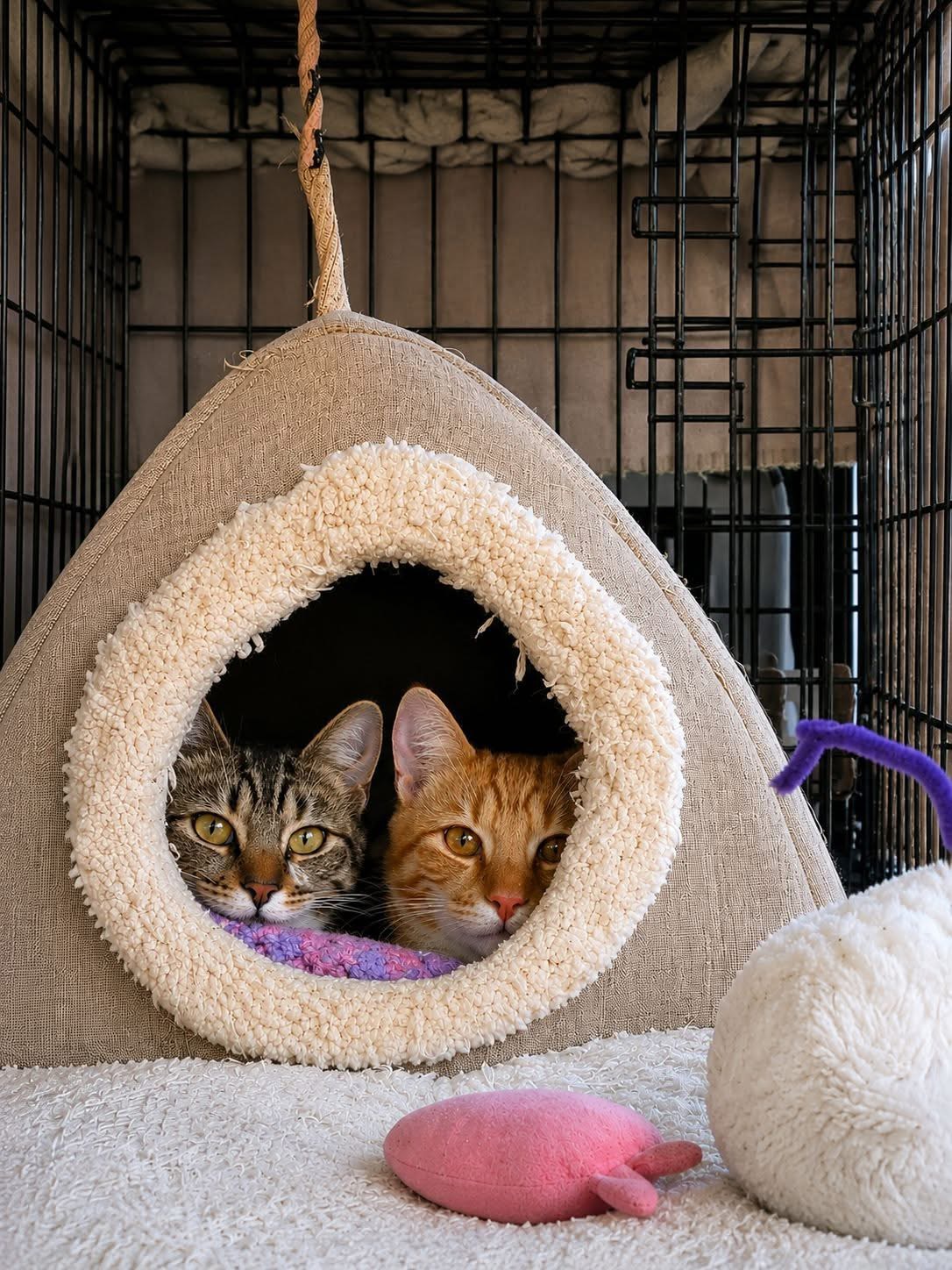
BB, Biscuit & Tabitha

Update 28 June 2026

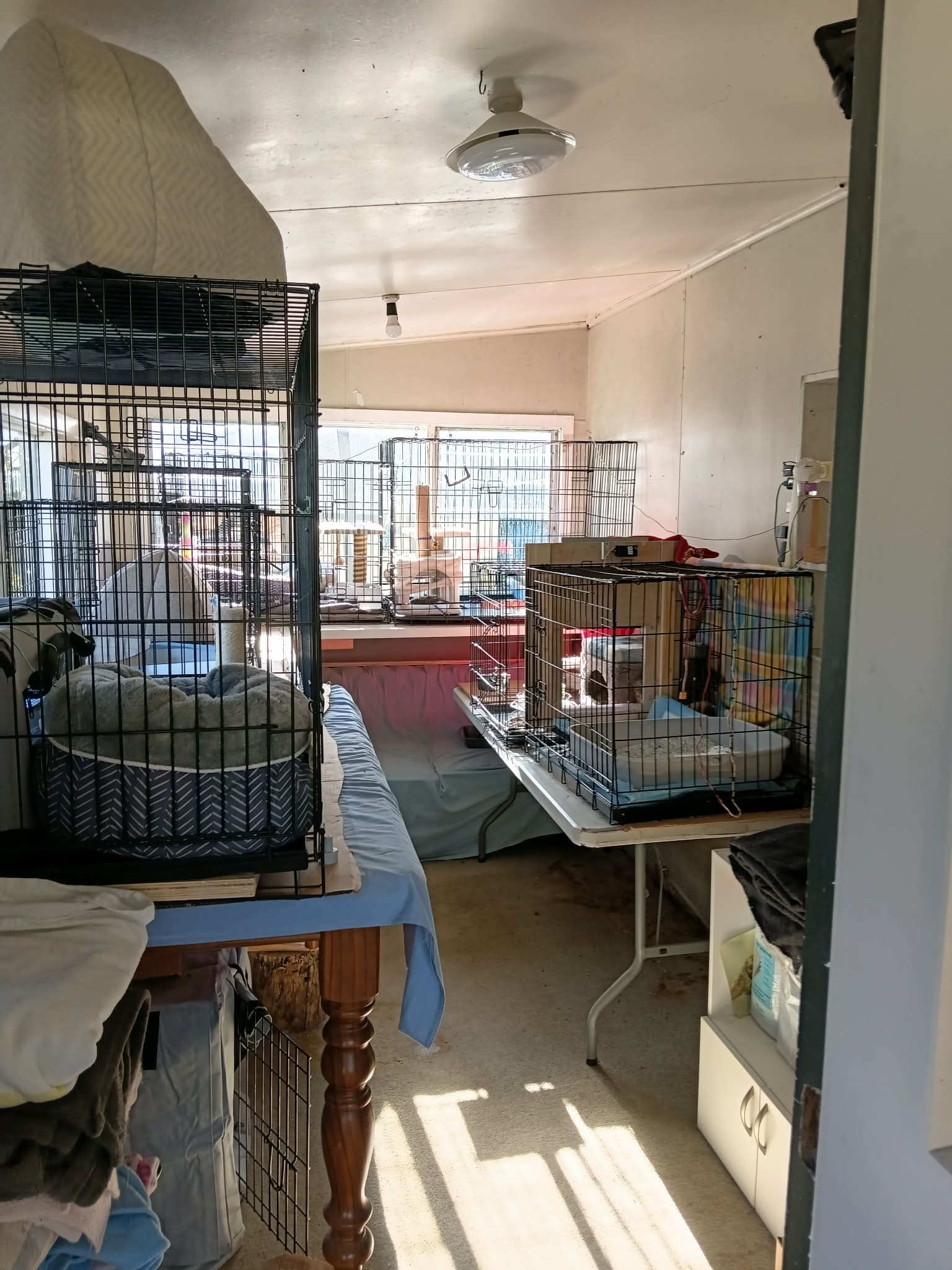
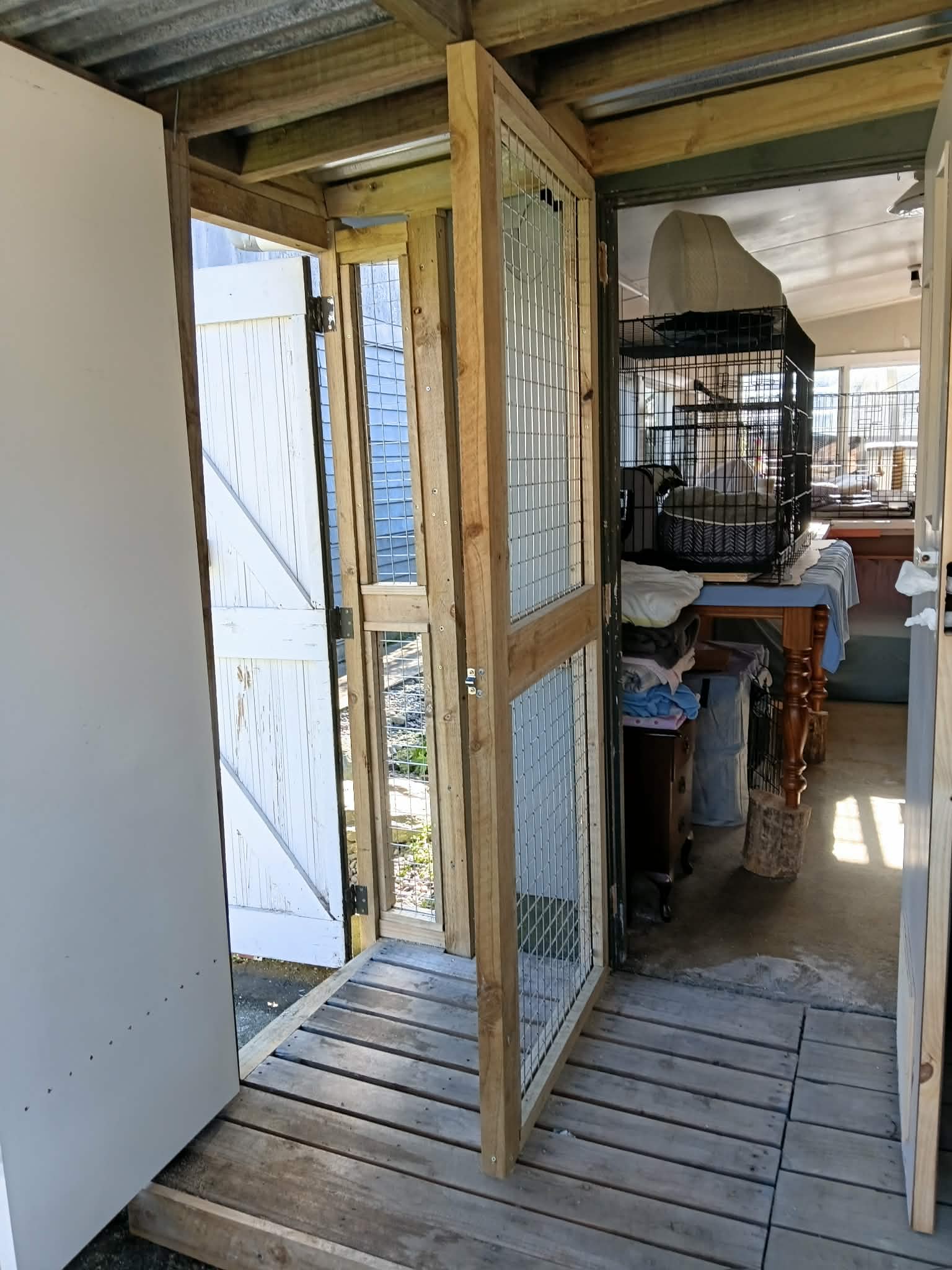
WOW, things are starting to really move forward for BB, Biscuit and Tabitha! This morning, before I even headed up to the shed (or should I start calling it the cattery now?), I checked the camera as I always do… and there was Tabitha, out and waiting, watching the door.
Of course, the second she heard me coming, she ducked straight back into her cubby! Some things never change. 😸

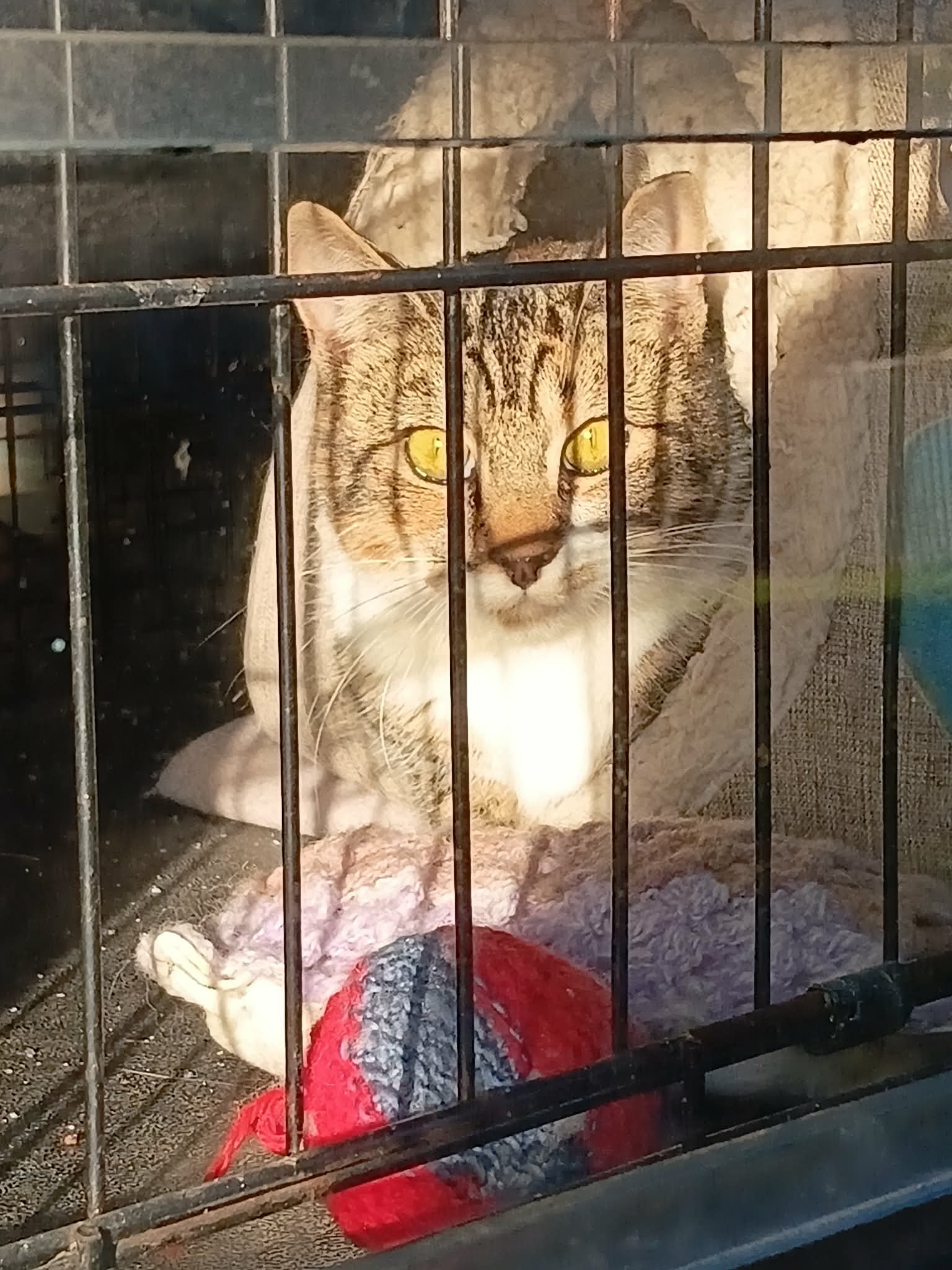
As usual, Tabitha’s crate was the quickest and tidiest to clean and replenish. She stayed tucked away in her cubby, simply watching me work. But I noticed another little step forward today, she was leaning further towards the entrance of her cubby to take her creamy treats from my fingers. And the best part? As soon as I left and shut the door, she was straight back out again! No long wait to make sure I was really gone first. Progress comes in the smallest ways.

Then there was BB…

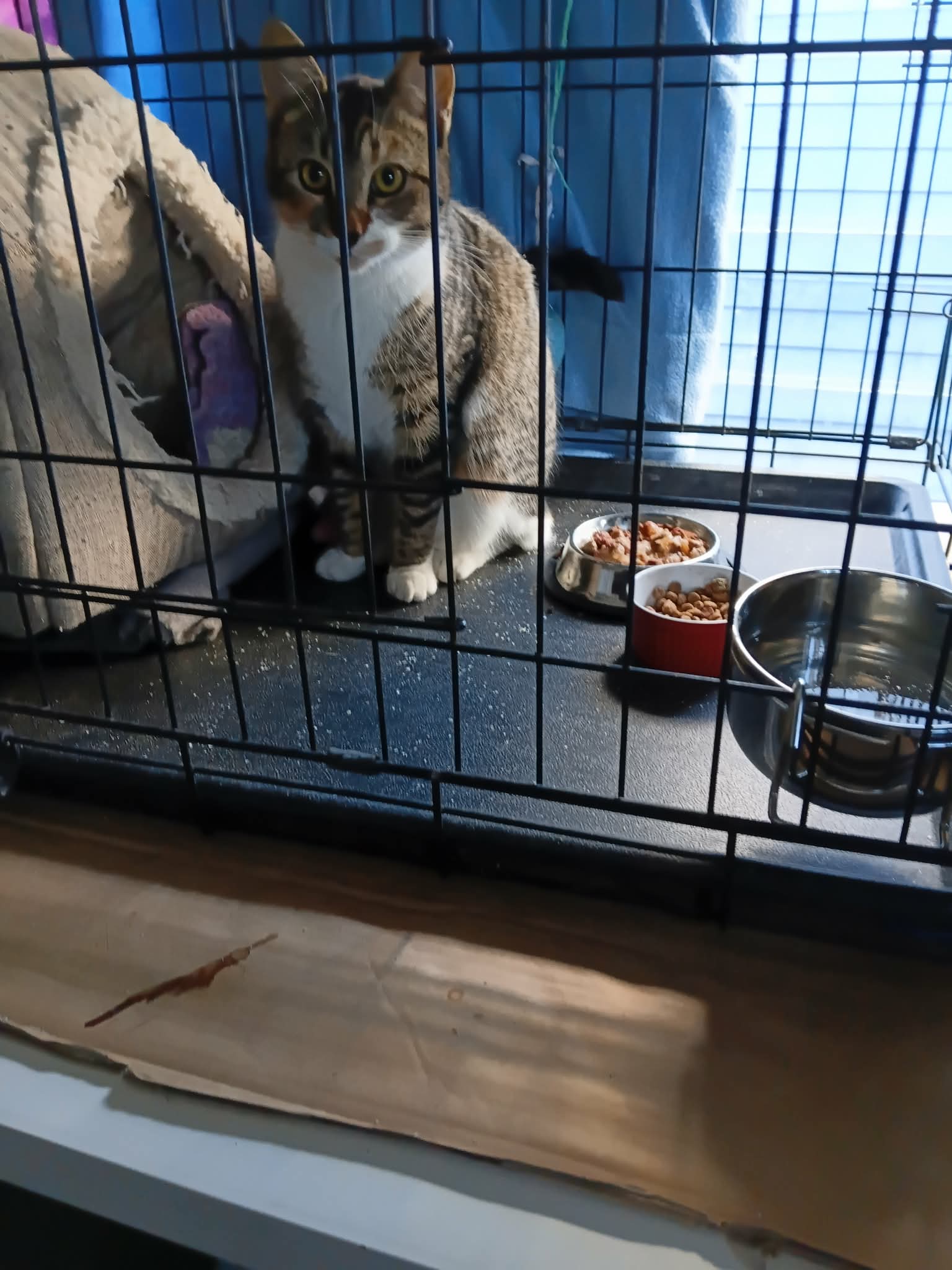
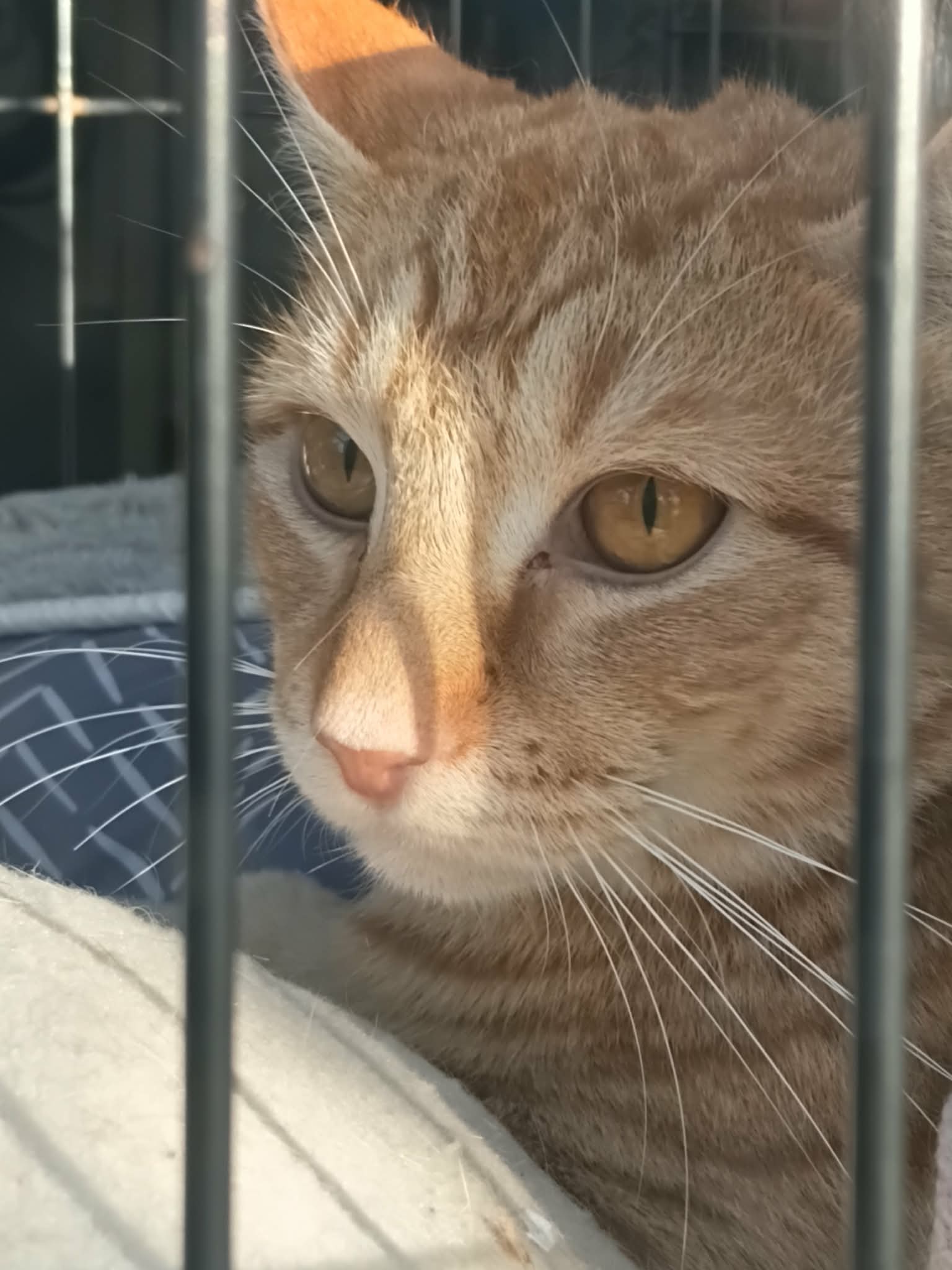
Somehow overnight he had completely turned his box around so it was facing the opposite direction, and all the floor rugs were bunched up. General BB chaos! 😂. But our boy continues to amaze me. Once I gently tipped him out of his box so I could rearrange everything again, he really didn’t mind too much. A little slinky, yes, but no panic.

Then, after I’d finished and he’d gone back into his favourite box, he actually came back out and met me halfway to get his daily creamy treat! Not only that, but he was fully enjoying his pats and rubs too. His little meows, squeaks and purrs are becoming more and more common, and it feels like he’s beginning to seek out interaction rather than simply tolerate it.

I also have to mention that BB keeps the cleanest litter tray of the three, making it very easy to sift. Such a tidy little gentleman.

And finally… Biscuit. Dear Biscuit…

As usual, he sang me a song or two of complaint while I sorted his litter box and food bowls. Growls and grumbles are still very much part of the routine!

But today there were some really encouraging changes.

Firstly, his poops were much less shredded. There were actually some decent-sized pieces that I could properly sift out of the litter – a strange thing to celebrate perhaps, but with Biscuit, these things matter!
Secondly, my little trick of wedging another tray up against his litter box is working beautifully. Any spillover goes into the extra tray and can simply be tipped back in. Even better, there was noticeably less scattering into that today.

While I’m cleaning and putting his room back together, I still place a board against his cubby so he can’t see exactly what I’m doing. He can hear me, of course, so he still gives me his running commentary of growls and complaints, but he can’t lash out. It seems to make the whole process much calmer for both of us. I even managed to give everything a really good disinfectant wash today as well, which felt like a bonus.

Then came treat time.

As always, Biscuit had his creamy treat on the end of a stick. What I noticed today was that although the growls were still there, they weren’t the loud, angry “I’m going to kill you!” growls and hisses we’ve become accustomed to. They were more of a rumble.

And he seemed more eager to lean his head forward for the treat too.

He still leaves a tiny bit on the end of the stick every time. I’ve learned now to simply take it away when he’s finished instead of trying to be pedantic and encouraging him to clean it off. In the past, trying to wipe it onto his chin or paw would earn me some very impressive hisses! So, in that regard, Biscuit has taught me to respect his wishes. 😹

So today’s little victories were:

🐾 Tabitha waiting for me outside her cubby and coming back out immediately after I leave.

🐾 BB meeting me halfway for treats, enjoying pats, and continuing to become more social and confident.

🐾 Biscuit giving me rumble-growls instead of furious growls and hisses, leaning forward for his treat, and showing improvements in his litter habits.

None of these things are huge on their own. But together, they tell a beautiful story.

Trust is growing.
Confidence is building.
And these three special souls continue to take tiny, brave steps forward, one day at a time. ❤️


Responsible Cat Ownership and Humane Population Management


For years, cat rescues (and others) have been advocating for their respective Councils’ support for a bylaw encouraging cat owners in our district to desex their cats and register their microchips on the New Zealand Companion Animal Register (NZCAR). Microchipping is not a Council fee; it is a small one-off cost paid by the owner to record their contact details on the national database.

For cat owners, these measures provide clear benefits. Microchipping significantly increases the likelihood of lost cats being reunited with their families, while desexing reduces the risk of certain cancers and other health issues, as well as reducing roaming, fighting, injury risk, and unwanted litters. These actions support improved welfare and longer, healthier lives for cats. Reduced-cost desexing programmes are offered by various rescue organisations to improve accessibility for owners.

Concerns continue to be raised about the impact of cats on native wildlife. Regardless of differing perspectives, it is in everyone’s interest to reduce the number of undesexed, unowned, and abandoned cats in the community.

What is increasingly concerning is the growing hostility towards cats emerging in parts of the public discourse. Cats are often portrayed as the problem, rather than a symptom of human responsibility and unmanaged breeding. In some cases, this rhetoric risks normalising attitudes that would previously have been considered unacceptable, including calls for or acts of cruelty towards cats.

A bylaw would provide a practical framework to support responsible cat ownership at a community level, alongside education on desexing and microchipping. This would help reduce unwanted litters and abandonment, and ease the ongoing burden placed on rescue organisations and the wider community.

In the meantime, we will also continue clearing up after the problem and caring for the ones who suffer most.

We appreciate your support, cat lovers 💕

Another heartwarming milestone this morning. 💚

As I went about the usual morning routine, replenishing food, cleaning litter trays and putting Biscuit’s cubby back where it belonged, BB gave me the biggest smile.

He flopped right over onto his side for a really good scratch… all while purring away. 🥹

For a cat who once had to be constantly on guard just to survive, seeing him so relaxed while I was moving around his room is incredibly rewarding. BB was the first of the three to come into care, and it really shows what time, patience and consistency can achieve.

Meanwhile, dear Biscuit kept me on my toes! 😂 His cubby had somehow rolled over, so I used my trusty wooden spoon to gently move things back into place. Apparently the spoon had committed a terrible offence, because Biscuit launched an attack on it! Thankfully it was only the spoon that took the punishment. Despite all the growling and bravado, he’s still happily taking his cream treats and continues to make slow but steady progress.

Sweet Tabitha was content as always, quietly watching from the safety of her cubby while I finished the morning chores. Every cat is different, and every one of them deserves the time they need to learn that people don’t always bring danger.

Progress with unsocialised street cats isn’t usually dramatic. It’s found in the little things…..a purr, a relaxed stretch, accepting a treat, or staying calm while someone moves around their space.

Those little moments are becoming more frequent, and they make every bit of effort worthwhile.

Thank you to everyone following their journey and cheering these three on. Your support means the world to us. 🐾💚

Our First Sponsors 

A milestone for Quiet Paws Creations!


Our First Official Sponsors!

Every journey begins with a single step, and today marks a very special milestone for Quiet Paws Creations.

We are absolutely delighted to welcome the Steadman family as our very first official cat sponsors, by sponsoring our handsome boy, Mouse.

When we launched our sponsorship programme, we hoped it would become a meaningful way for people to make a lasting difference in the lives of our rescued cats. To have the Steadman family believe in that vision from the very beginning means more than words can express.

Their sponsorship will help provide for Mouse’s ongoing care, including food, veterinary treatment when needed, enrichment, and everything else that goes into giving him the safe, happy life he deserves. But beyond that, they have become part of our story.

Being our first sponsors is something that can only happen once, and the Steadman family will always hold that special place in the history of Quiet Paws Creations. We are incredibly grateful for their kindness, generosity, and faith in what we are building.

From all of us—and especially from Mouse—thank you for becoming part of our family. We are honoured to have you walking beside us on this journey.

We hope this is the beginning of a wonderful community of sponsors helping rescued cats receive the love, care, and second chances they deserve. If you have ever thought about sponsoring one of our cats, we’d love to welcome you too. Together, we really can change lives, one paw at a time.

🐾 With heartfelt thanks,

Quiet Paws Creations

 IMG 1333

Mouse Remembered

att.oWjOkN mmFPcfdvIo 9 pp8Q cJPN0huKuEbQHOnqV8att.k3XiIK0 hbM EvpPTBBI O8seOoyEagKcKrcfCKRa1U


A free cat choosing affection is one of the greatest compliments a rescuer can receive….
Mouse Remembered . When Mouse was first trapped, he surprised me.

Like many semi-feral cats, confinement changed him. Away from the pressures of outdoor life, he discovered that human hands could provide more than food and vet visits. He learned about scritches, chin rubs, gentle attention and all the little comforts that come with feeling safe.

Then, when it was time for his release, something else happened. Mouse went back to being Mouse.

He was still around. Still playful. Still interested in what I was doing. But the affectionate cat I had seen during confinement seemed to disappear. He wasn’t interested in being touched and preferred to keep our relationship at a comfortable distance.

I accepted that. After all, rescue is not about turning every cat into a lap cat. It’s about giving them choices.

This morning, though, something changed. For the first time since his release, Mouse walked up as I reached out my hand and gently bunted it with his head. I left my hand where it was. He did it again.

So I started scratching around his cheeks, under his chin and behind his ears. Within moments, Mouse melted. He rolled onto his back, stretched towards me, squirmed with pleasure and began purring. Before I knew it, I was rubbing his chest while he wriggled around as though he was rediscovering something wonderful.

It felt like watching a memory come back. Not a memory in the human sense, but a reminder that somewhere in Mouse’s world he still remembered what it felt like to trust, to relax, and to enjoy affection.

The best part was that this wasn’t happening because he was confined. He wasn’t in a crate or recovery pen. He was completely free to walk away.

Instead, he chose to stay. …For anyone who works with shy, semi-feral or formerly unsocialised cats, these moments are incredibly special. Progress isn’t always a straight line. Sometimes cats seem to go backwards. Sometimes they appear to forget everything you’ve worked on together.

And then one day, months later, they walk up, touch their head to your hand and remind you that trust was there all along. Today, Mouse remembered.

And I don’t think I’ll be forgetting that moment anytime soon.

Why a Catio?

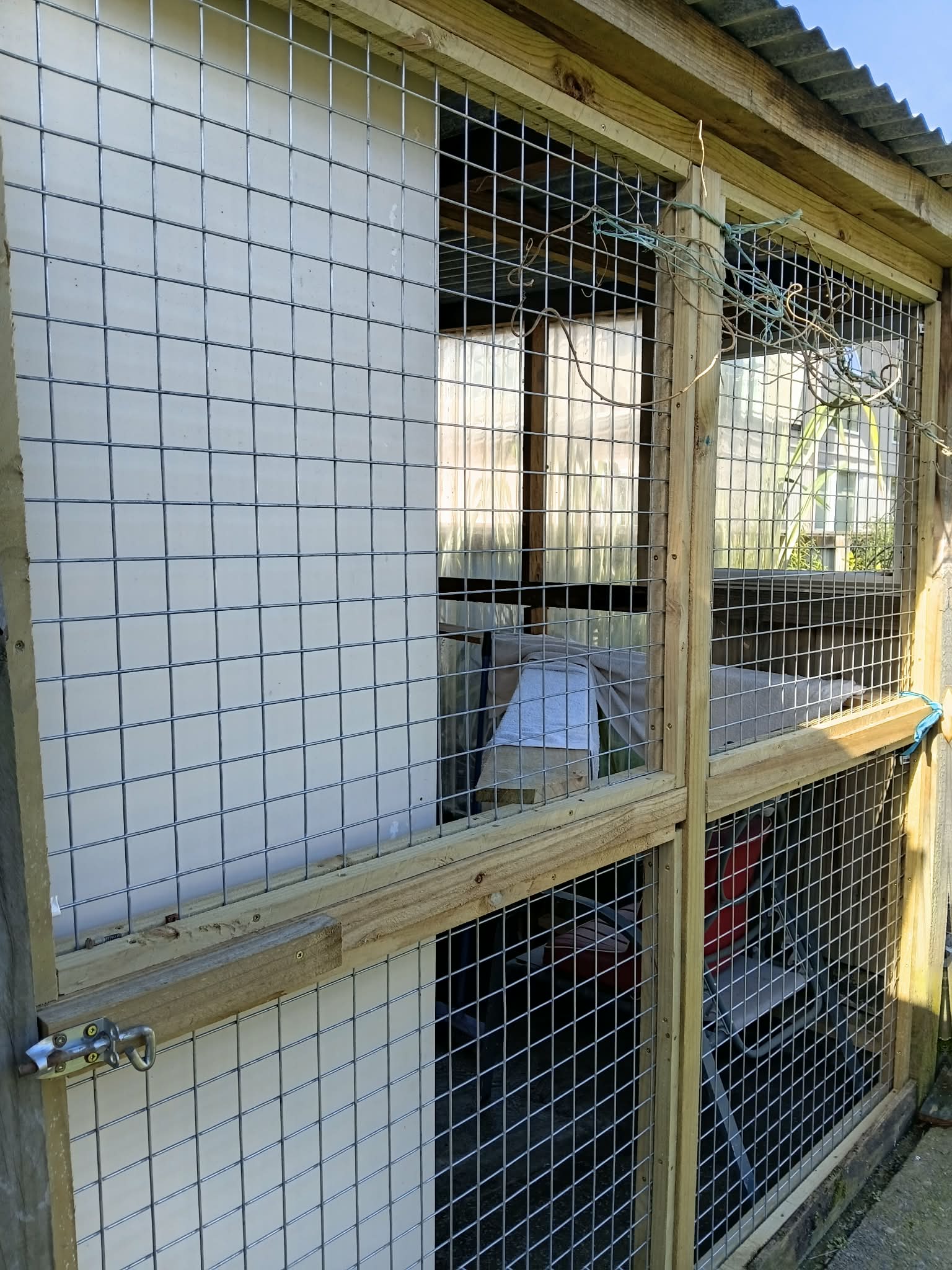
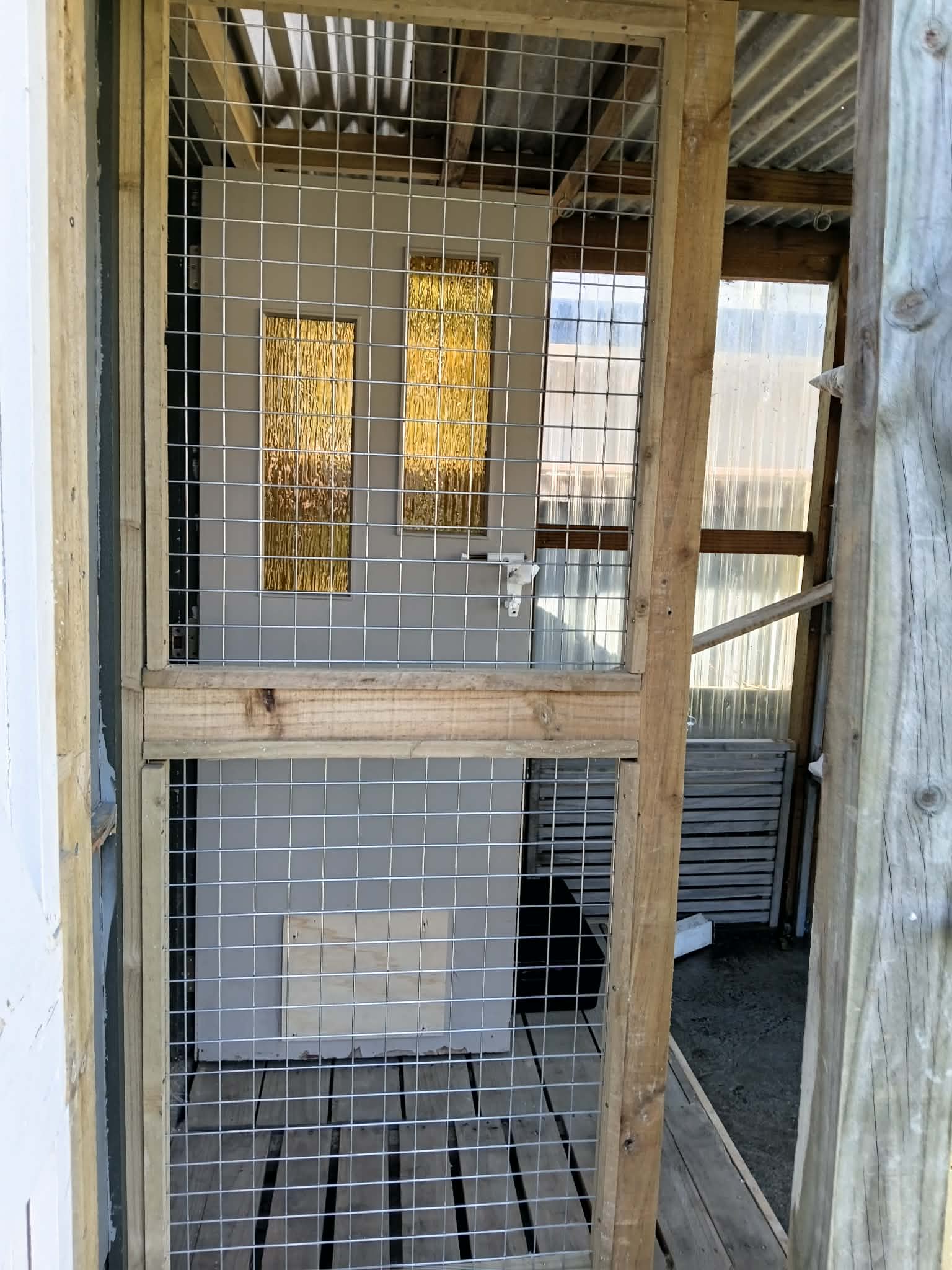
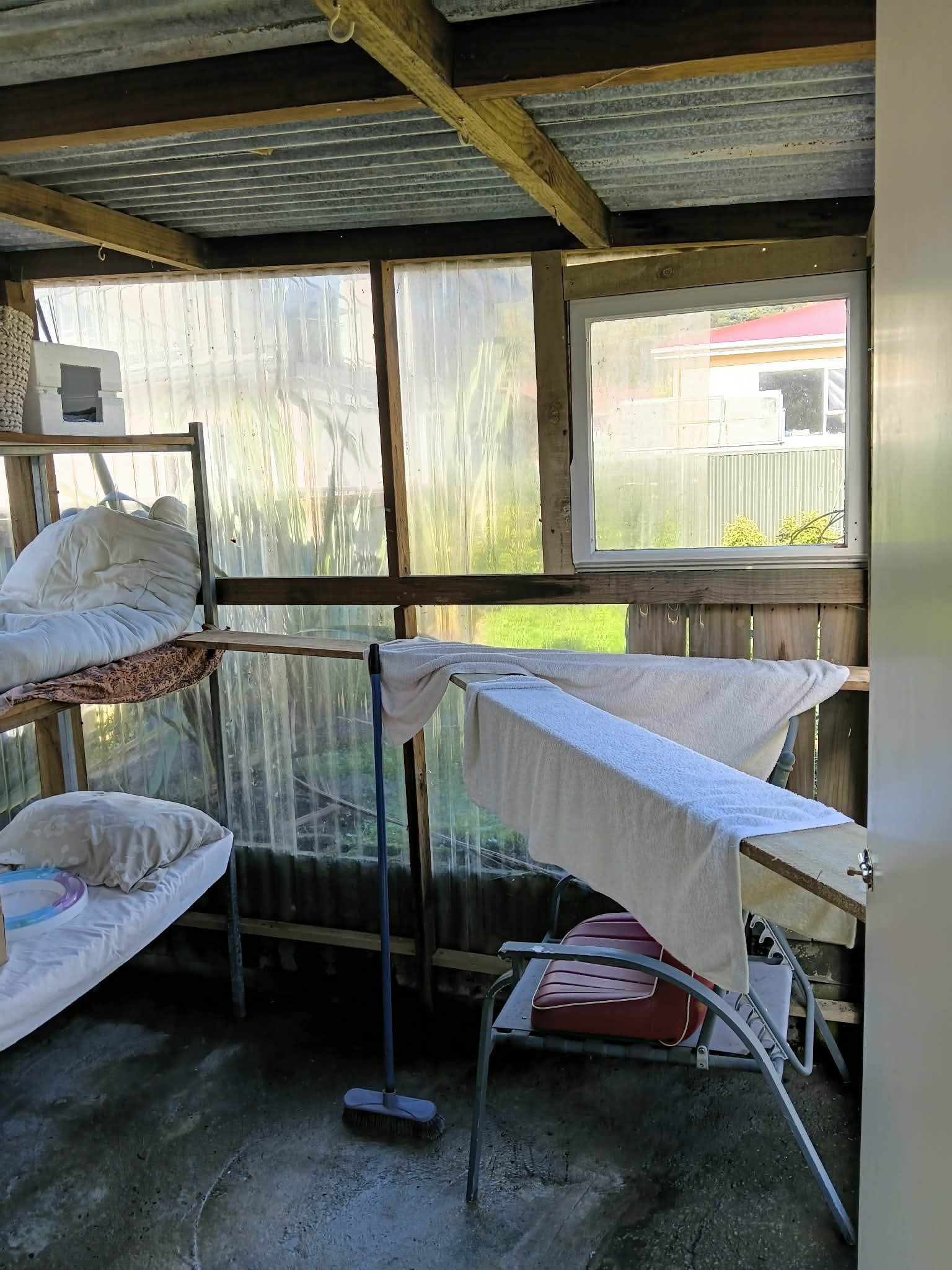
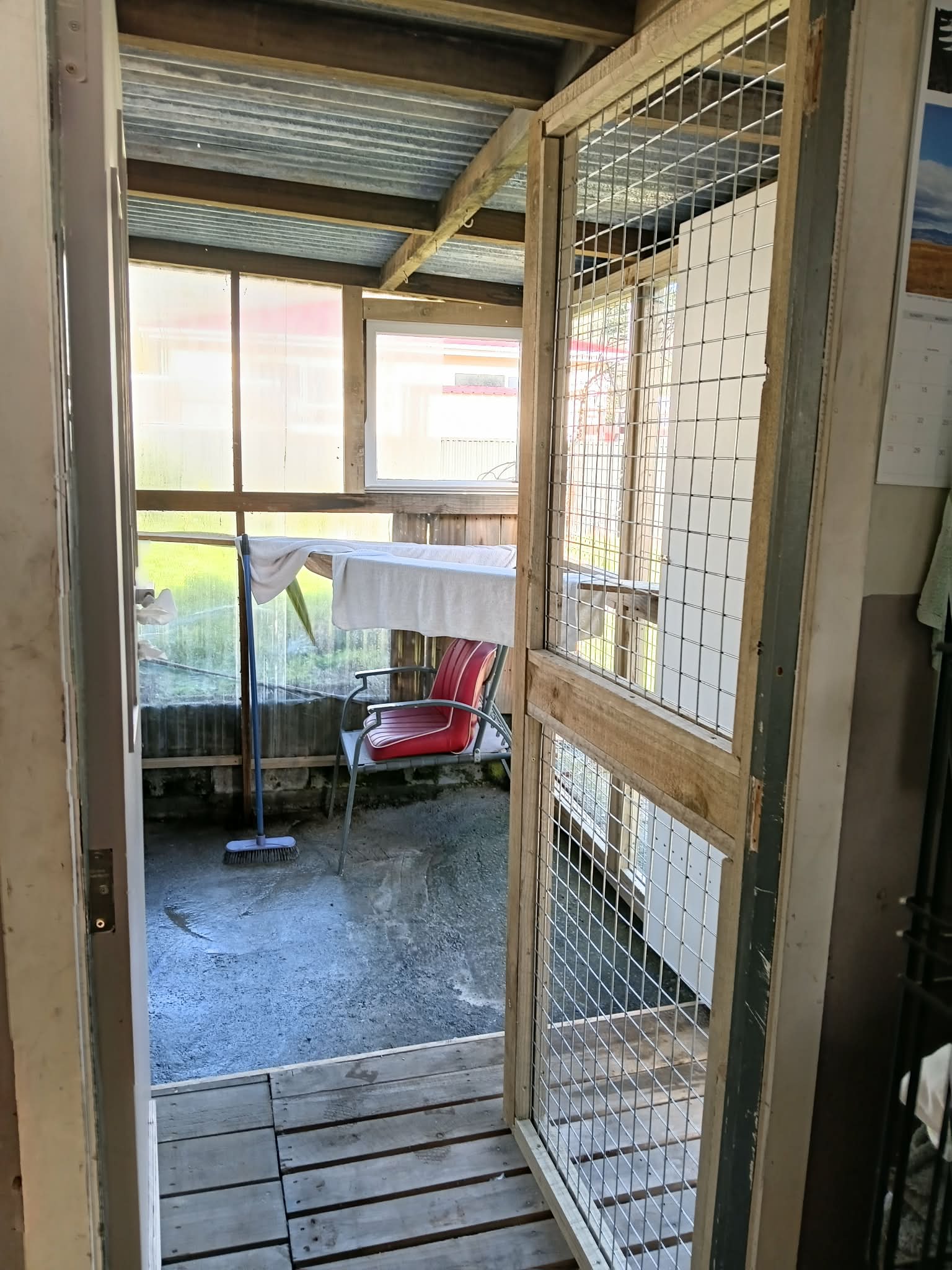
Catios are a really effective way to give cats the best of both worlds — fresh air, sunshine, stimulation, and outdoor enrichment, while keeping them completely safe from the risks that come with roaming. They protect cats from traffic, aggressive fights with other animals, exposure to diseases, poisoning, and the dangers posed by people who don’t have cats’ welfare at heart. A well-designed catio turns the outdoors into a secure extension of the home, letting cats climb, explore, and observe the world without the stress or unpredictability of free roaming. It’s a simple idea, but it can make a huge difference to both safety and quality of life. This is mine

att.5oSbbi2UwiAE It57te 0oAl43Am26YSBsRNrw9EE k

att.Y5jur5thdoqyHfrxTcL35ASadEnyNeO3vumO6N1LwX4

att.KR ggU0qteT3 25Bpvm0uOWmGf1dDm9fujUGURPs7CU


When Compassion became Controversial


When Compassion Became Controversial

There was a time when most people saw a cat and simply saw a cat.

A creature that shared our homes, curled in sunny windows, purred on cold nights, and sometimes survived against incredible odds on the streets. Cats were loved, pitied, admired, or occasionally ignored. But they were rarely hated.

Then something changed.

As conservation concerns grew, the conversation around cats began to shift. At first, it seemed reasonable enough. Scientists studied wildlife declines. Conservationists raised concerns about predators. Communities discussed how to protect vulnerable species.

These were important conversations. But somewhere along the way, the discussion stopped being about balance and solutions. It became about blame.

Headlines became more dramatic. Social media rewarded outrage. Nuanced discussions were drowned out by shocking claims and emotional arguments. Cats were increasingly portrayed not as animals following their instincts, but as villains responsible for every environmental problem.

People who cared for stray cats found themselves accused of harming wildlife simply because they offered food to a hungry animal. Volunteers who spent their own money desexing cats were criticised rather than supported. Rescue groups were labelled part of the problem despite preventing thousands of unwanted litters.

The language became harsher.

What had once been discussions about management and responsibility became calls for eradication. Compassion was dismissed as weakness. Anyone who questioned extreme measures was accused of caring more about cats than native species.

Yet lost in the noise was a simple truth. Cats did not create themselves. They did not decide to be abandoned. They did not choose to be dumped at rubbish tips, left behind when families moved, or born into generations of neglect. They did not write the policies, build the cities, clear the forests, or introduce themselves to countries where they did not originally exist.

Humans did all of that. And now, rather than accepting responsibility, many preferred to place all the blame on the animals least capable of defending themselves.

The irony was that the people working hardest to help cats were often the same people advocating for practical solutions. They supported desexing programmes. They worked to reduce populations humanely. They spent countless hours trapping, treating, and rehoming animals so that fewer cats would be born into lives of hardship.

Their goal was not endless colonies. Their goal was fewer homeless cats. Yet they often found themselves attacked from both sides. Too compassionate for those demanding lethal solutions. Too realistic for those unwilling to acknowledge ecological concerns.

Meanwhile, the cats remained exactly what they had always been. Animals. Not evil. Not malicious. Not masterminds of environmental destruction. Just animals trying to survive.

The tragedy of the debate is not that people care about wildlife. We should care deeply about wildlife. The tragedy is that somewhere along the way, caring about wildlife became, for some, a justification for abandoning compassion.

As if concern for one species required hatred of another. But true conservation has never been about cruelty. True conservation is about responsibility.

It is about recognising that environmental problems are complex, that ecosystems matter, and that suffering matters too. It is about finding solutions that reduce harm wherever possible rather than celebrating it when it occurs. Because a society should be judged not only by how it protects its most vulnerable wildlife, but also by how it treats its most vulnerable animals.

And perhaps one day we will remember that compassion is not the enemy of conservation.

It is the thing that makes conservation worth fighting for in the first place.

 att.G8vpCimPBfCCKnlZN4x9Gy eqROC6qQAUapyNP3 yoE

Where does the money go??


Where the Money Goes

Let’s talk about where the money goes.

Because from the outside, it can look like there’s some kind of steady support keeping things moving. But that’s not really how this works.

There’s no regular funding stream here. No reliable weekly income for the work being done. Just a couple of generous supporters helping in practical ways — litter supplied by one, kibble by another — and everything else filled in quietly from somewhere else entirely.

Wet food is still bought as needed. Along with fuel, vet costs, traps, bait, and all the small ongoing expenses that don’t look like much on their own, but never really stop adding up.

Then there’s the reality of the work itself.

Cats don’t arrive in neat schedules. They come and go on their own terms. Some days nothing happens. Other days everything happens at once,  like cameras constantly triggering, traps needing resetting, food disappearing faster than expected, and plans changing hour by hour.

And when a cat finally does need vet care, it’s never predictable. Desexing, injuries, illness,   the kind of things that can’t wait, and don’t adjust themselves to whatever else is going on.

So the money doesn’t disappear.

It gets absorbed immediately into whatever is happening right now,  feeding, trapping, travel, vet work, equipment, and the constant in-between costs that come with trying to stay one step ahead of a moving situation.  And when that runs out, the gap is quietly covered the only way it can be: through personal cost, time, and persistence.

There was a couple of small donations recently.  By a couple of sales of my art cards,  plus a couple of straight donations....That helped. It genuinely did. But it also highlights how rare that kind of support is, and how much relies on stretching everything as far as it will go.

This isn’t a funded operation.  It’s a patchwork system held together by practical support where it exists, personal input where it doesn’t, and a constant cycle of problem-solving that doesn’t really pause.

But there are still the wins. A trap finally works at the right moment. A cat that’s been avoiding everything slips up just once. A small success that turns into a real outcome instead of another missed chance.

And that’s what keeps it going.  Not because it’s funded.

But because it still works — just often enough to matter.

att.x77VZ5xV9XEmI g99uKoytMygCpia3zA9UEpFWvTClQ


Three Cats, Three Different Journeys

Three Cats, Three Different Journeys

When BB, Biscuit and Tabitha first arrived, they had one thing in common: they wanted absolutely nothing to do with people.

Each cat responded differently to captivity. BB became the quiet observer. He would watch everything from a safe distance, always cautious, always ready with a hiss if anyone got too close. Yet over time, small cracks began to appear in his tough exterior. These days he watches for treats, and recently he even forgot himself and started purring before realising what he was doing.

Biscuit chose a different approach. He became the complainer. Every crate clean-out is accompanied by growling and strong opinions about litter trays, blankets and anything else that has been moved without his permission. Despite his protests, he is becoming more predictable and less reactive, and he never misses the opportunity for a creamy treat left behind after the morning chores.

Then there is Tabitha. Quiet, watchful and often overlooked, she has steadily gained confidence at her own pace. While the boys draw attention with their antics, Tabitha quietly observes, emerging more often and becoming increasingly comfortable in her surroundings.

Recently, something happened that would have been hard to imagine when they first arrived. After the morning clean-up and feeding routine, all three cats emerged from hiding within minutes of me leaving. The cameras captured them moving around, exploring, grooming and simply being cats.

It may not sound like much, but progress with feral cats is rarely dramatic. It comes in small moments: a cat appearing sooner than expected, a relaxed posture, a forgotten purr, or simply the confidence to step out into the open.

BB, Biscuit and Tabitha are still wary of people. They are still feral. But every day they show a little more curiosity, a little more confidence and a little less fear than the day before.

For now, that’s enough.


The Joys and Frustrations of Trapping


The Joys of Trapping

People who have never trapped a cat have a wonderfully simple idea of how it works.

You put out a trap. A cat walks in. The trap shuts.

Everyone goes home happy.

I would like to personally invite those people to spend a Sunday evening with me.

The reality of trapping is a strange mix of patience, persistence, excitement, frustration, and occasionally questioning whether the cats are actually smarter than the humans.

There are the success stories, of course. Those magical moments when everything goes exactly to plan. The cat walks in, the trap fires, and suddenly a cat that has spent months or years surviving outdoors is safely on the way to being desexed and cared for. Every successful trap is a victory, not just for that cat, but for all the kittens that won’t be born into a hard life of struggle.

Those moments make all the effort worthwhile.

Then there are the “almosts”.

The cats that approach the trap, sniff every corner of it, stare suspiciously at it for twenty minutes, and then walk away as if they’ve just completed a full health and safety inspection.

The cats that put one paw in. Then another. Then suddenly decide that perhaps today is not the day. And back out again.

Then we have the cheaters. Every trapper knows the cheaters.

These are the clever cats that somehow manage to get the food without actually standing where they’re supposed to. The ones that stretch their necks to impossible lengths, hook food towards themselves with a paw, or discover ways to move bait into places where the trigger plate can’t do its job.

You watch the camera footage later and wonder if they’re secretly sharing tips with each other.

And then there are the smart old tom cats. The big experienced fellows who didn’t get to be old by making bad decisions. They approach cautiously. They watch. They think. They analyse.

Sometimes I am convinced they are calculating the trap’s engineering specifications before making a move.

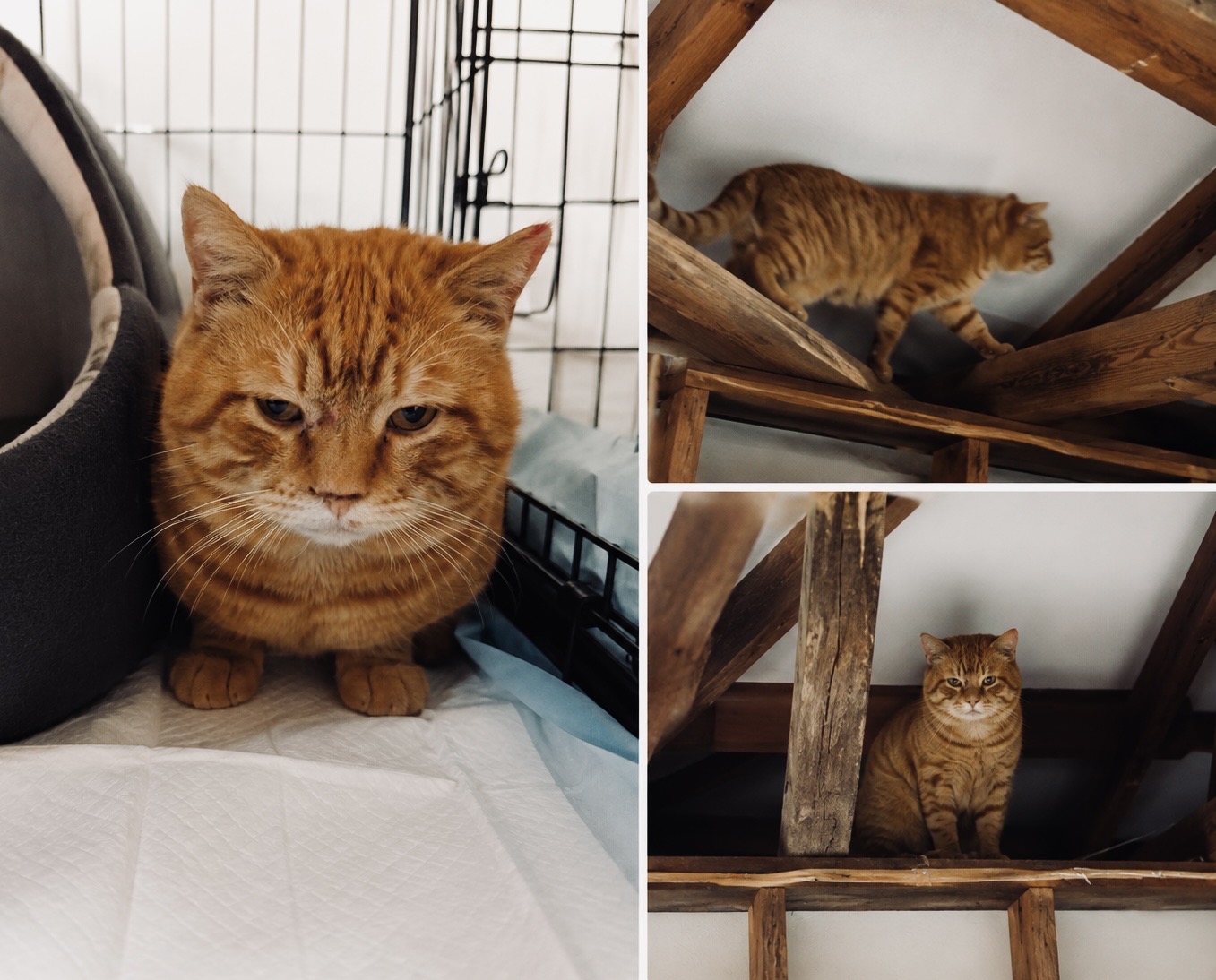
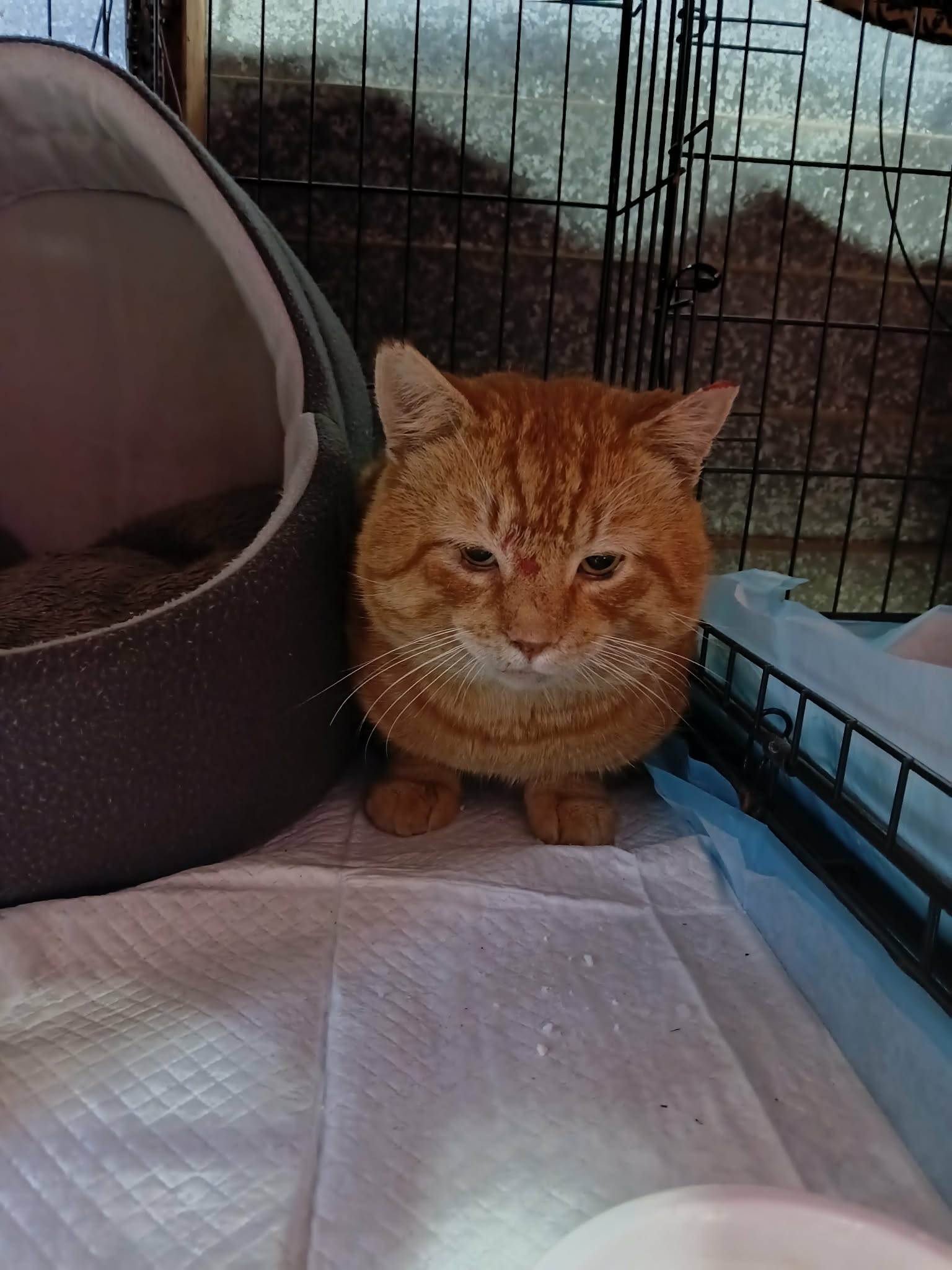
One particular ginger tom recently demonstrated this beautifully.
The first time he entered the trap, he backed out before it could fire. The second time, another ginger cat managed to trigger the trap but escaped before being caught.

Then the original ginger returned. He walked all the way inside. Stood on the trigger plate. Ate the food. Stayed there. Ate some more. And the trap did absolutely nothing. Not a thing.

At this point I began to suspect that the trap and the cat had entered into a private agreement without consulting me.

Eventually I had to go outside, turn on the light, and personally evict a cat from a trap that was refusing to trap cats. The cat left.

The trap remained open. My blood pressure did not. Of course, sometimes the trap won’t fire.

Sometimes it fires too soon. Sometimes a cat manages to escape. Sometimes the bait disappears. Sometimes the cat disappears. Sometimes the camera alerts go off all night long for every creature except the one you’re hoping to catch. And yet somehow we keep trying.

Because behind every frustrating evening spent staring at security footage is the possibility that tonight might be the night.

Tonight might be the cat that finally walks in. Tonight might be the one that has been avoiding the trap for weeks. Tonight might be the one that changes the future for countless kittens yet to be born. Trapping isn’t glamorous. It’s often frustrating. It’s occasionally ridiculous. And it frequently leaves you muttering at inanimate objects. But every success matters. Every cat safely trapped matters.

And while the clever toms, the cheaters, the near misses, and the malfunctioning traps may occasionally win a battle, the trappers keep showing up.

We reset the trap.Check the camera. Top up the bait. And wait.
Because sooner or later, one of those cats makes a mistake.

And when that trap finally closes behind them, every frustrating, hilarious, exasperating moment suddenly becomes worth it.


© Quiet Paws Creations ~ All Rights Reserved