
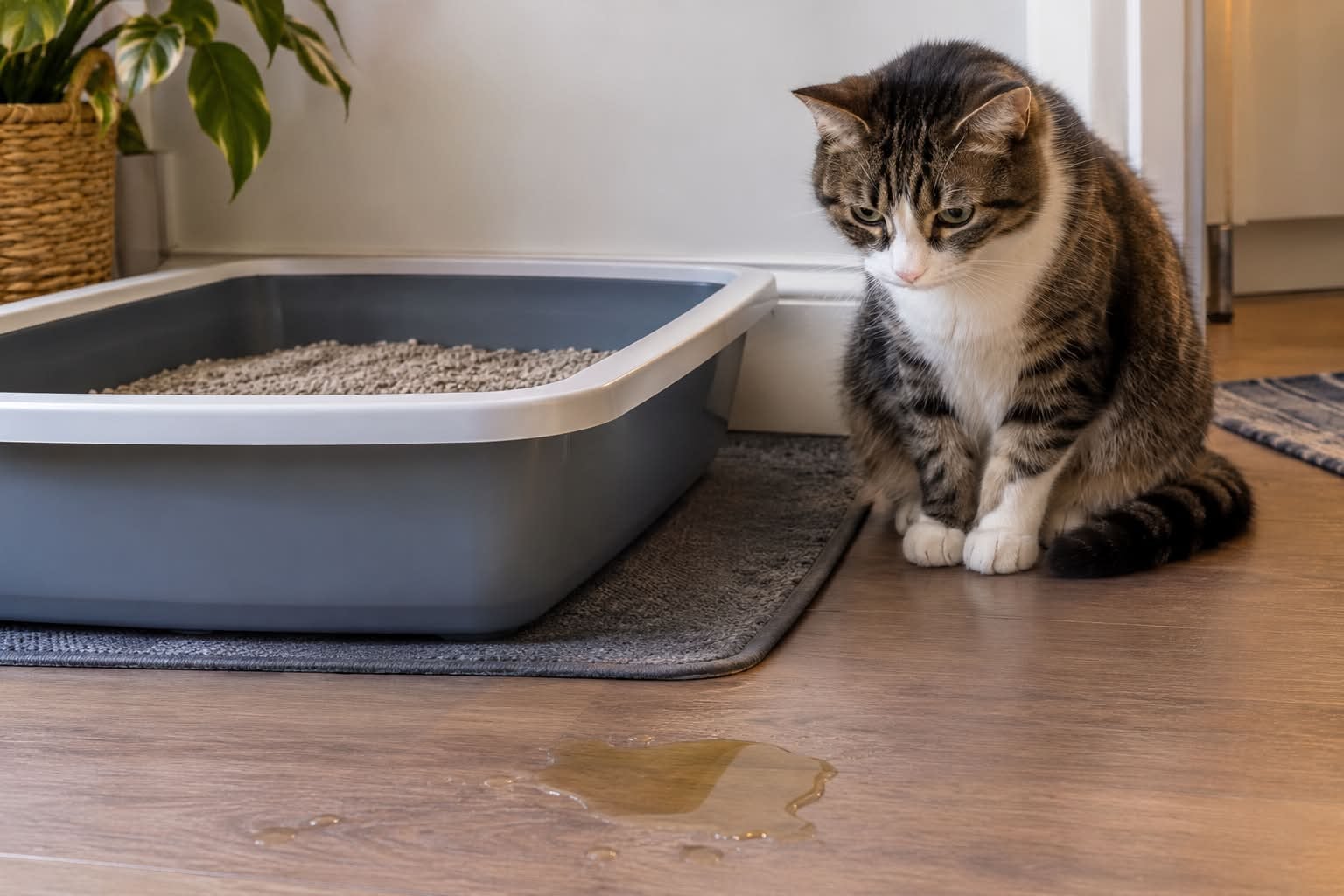
Why Is My Cat Peeing Outside the Litter Box?
If your cat has suddenly started peeing somewhere other than the litter box, the first thing to know is:
Your cat probably isn’t being naughty or “getting back at you”.
Cats don’t usually urinate outside the litter box to punish us. There is nearly always a reason — and sometimes that reason is medical.
I’m not a veterinarian. I’ve simply lived with cats for many years, including rescue cats with all sorts of different behaviours and problems. These are some of the basic things I would consider if a cat suddenly starts peeing in the wrong place.
First things first — rule out a health problem
A cat that suddenly starts urinating outside the box should ideally be checked by a vet, particularly if this is a new behaviour.
Urinary problems can be painful, and cats can be very good at hiding pain.
Things that can cause changes in urination include:
* urinary tract infections
* bladder inflammation
* crystals or bladder stones
* kidney problems
* diabetes
* arthritis or other pain making it difficult to get into the litter box
* constipation
* other medical conditions
Male cats deserve particular attention when it comes to urinary problems. A blocked bladder is an emergency and can become life-threatening very quickly.
Seek veterinary help urgently if your cat:
* is repeatedly trying to pee but producing little or nothing
* is straining in the litter box
* cries or appears distressed while trying to urinate
* has blood in the urine
* is repeatedly licking around their genital area
* is vomiting, very lethargic or distressed
* has suddenly stopped passing urine
If you’re unsure, ring your vet and ask. It’s much better to make that phone call than to wait and hope it settles.
⸻
So why might a healthy cat pee outside the box?
Once medical problems have been considered, there are quite a few everyday possibilities.
🐾 The litter box itself
Cats can be surprisingly fussy about their toilets!
Think about:
Is the box clean enough?
Some cats happily use a box several times before it is cleaned. Others basically want a spotless toilet every time.
Scoop out solids and urine clumps regularly and keep the box reasonably clean.
Is there enough litter?
Some cats like a deeper layer to dig in, while others prefer less.
Has the litter changed?
If you’ve suddenly changed brands, texture or fragrance, your cat may decide they don’t like the new stuff.
If possible, make changes gradually.
Is the litter scented?
Some cats dislike strongly perfumed litter. What smells lovely to us can smell absolutely overwhelming to a cat.
Is the box big enough?
Your cat should be able to comfortably turn around, squat and dig without feeling cramped.
And remember — that tiny kitten who fitted perfectly into a little box may eventually become a rather large cat!
⸻
Where is the litter box?
Location matters.
Cats generally prefer somewhere quiet and reasonably private where they aren’t going to be startled while using the toilet.
A litter box beside a washing machine that suddenly goes into spin cycle might not be terribly appealing!
Try to avoid putting the box somewhere your cat feels trapped or where another animal can ambush them.
And if you have more than one cat, make sure one cat can’t easily block another from getting to the litter box.
How many litter boxes?
A commonly recommended starting point is:
one litter box per cat, plus one extra.
That isn’t always practical in every home, but the basic idea is important — particularly in multi-cat households.
If you have several cats and only one litter box, one cat may decide that sharing isn’t for them!
⸻
Has something changed at home?
Cats notice changes that we sometimes don’t even think about.
A new baby, visitors, building work, moving furniture, another pet, a new cat in the neighbourhood, a different routine or even a change in where the litter box is kept can cause stress.
Some cats respond to stress by hiding.
Some become clingy.
And some start urinating in inappropriate places.
This doesn’t mean the behaviour is “just psychological”, though — medical problems should still be ruled out first.
⸻
💦 Peeing or spraying?
These aren’t necessarily the same thing.
A cat that squats and leaves a puddle on the floor, carpet or bed is usually urinating.
Spraying is different. A cat will generally stand, lift their tail and spray a small amount of urine onto a vertical surface.
Spraying is often associated with territorial or social issues, although there can be other reasons too.
Neutered cats can spray as well, so don’t assume it can only happen with an entire male.
⸻
Why do cats sometimes pee on beds or clothing?
This one can be especially upsetting!
Unfortunately, your lovely soft bed can become a very attractive toilet to a cat who is stressed, uncomfortable or unhappy with their litter-box situation.
Soft materials can also be appealing because they are absorbent.
If your cat has chosen a particular place, clean it thoroughly with an enzymatic pet-urine cleaner where possible. Ordinary household cleaners may remove the smell for us but leave enough scent behind for your cat to know, “Ah yes — this is my toilet.”
Try to prevent access to the area while you’re working out why it is happening.
⸻
❤️ Don’t punish your cat
This is probably the most important bit.
Don’t yell, hit, frighten or rub your cat’s nose in it.
Your cat isn’t going to understand that you are punishing them for something they did earlier.
It can also make an anxious cat even more anxious — and potentially make the problem worse.
Instead, try to work out why your cat feels the need to pee somewhere else.
⸻
A simple checklist
If my cat suddenly started peeing outside the box, I’d be asking:
☐ Has this happened suddenly?
☐ Could my cat be unwell or in pain?
☐ Is my cat actually passing a normal amount of urine?
☐ Is the litter box clean?
☐ Have I changed the litter?
☐ Is the box large enough?
☐ Is it somewhere quiet and safe?
☐ Could another cat be frightening or blocking access?
☐ Has anything changed at home?
☐ Is my cat spraying rather than simply urinating?
☐ Have I properly cleaned previous accidents?
And if you’re still not sure what’s going on:
Talk to your vet.
Sometimes the answer is something very simple. Sometimes it isn’t. The important thing is not to assume that a cat is simply being difficult when there may be a medical problem behind the behaviour.
⸻
A little Quiet Paws reminder
I’ve cared for enough cats to know that they don’t always read the rule book!
Every cat is different, and what works beautifully for one cat may be completely unacceptable to another.
The tips on this website are based on everyday cat care and my own experience with cats and rescue cats. They are not veterinary advice and aren’t intended to diagnose or treat illness.
If you are worried about your cat, particularly if their urination has suddenly changed, please speak to your veterinarian.