🐾 Feeding & Nutrition – Getting Your Cat’s Diet Right
Good nutrition is one of the most important foundations of a healthy, happy cat. What goes into your cat’s food bowl can influence everything from their energy levels and digestion to their coat condition, muscle strength and long-term health.
But with so many brands, varieties and conflicting opinions about cat food, knowing what to feed can feel a little overwhelming.
The good news? Feeding your cat well doesn’t have to be complicated. Understanding a few basic nutritional needs can help you make better choices for your feline friend.
🐱 Cats Are Obligate Carnivores
Unlike dogs and humans, cats are obligate carnivores. This means their bodies are designed to obtain essential nutrients primarily from animal-based foods.
Cats need nutrients found naturally in animal tissues, including:
- Protein: Essential for maintaining muscles, supporting growth and repairing body tissues.
- Taurine: An essential amino acid that cats cannot produce in sufficient quantities themselves. It supports healthy vision, heart function and reproduction.
- Animal fats: Provide concentrated energy and essential fatty acids for healthy skin, coat and normal body functions.
- Vitamins and minerals: Including calcium, phosphorus and vitamins A, D and B, all needed for everyday health.
- Water: Essential for digestion, circulation, kidney function and maintaining hydration.
Cats cannot simply live on meat scraps or fish alone. They need a properly balanced diet that supplies all their essential nutrients.
🍗 Wet Food or Dry Food?
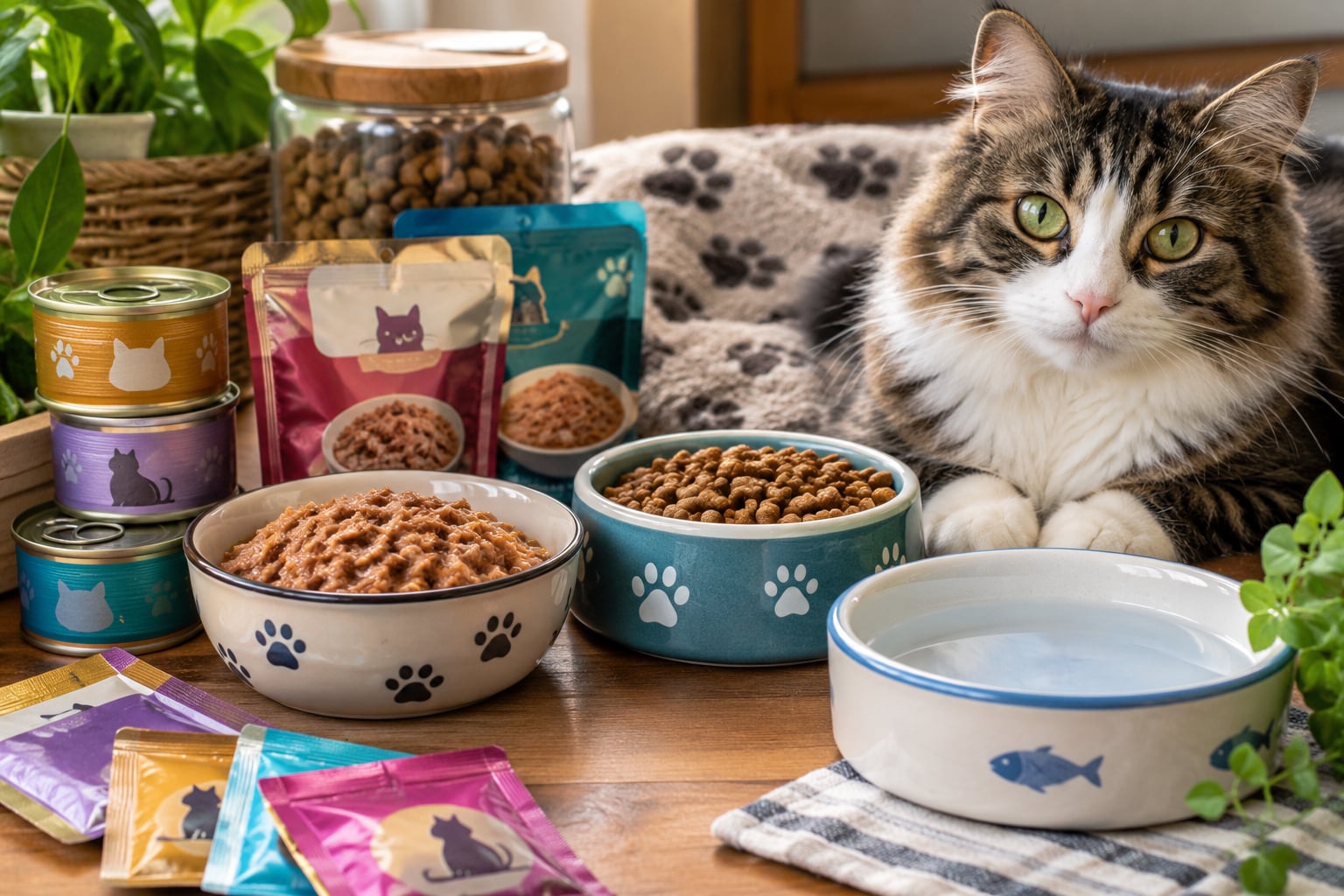
There are advantages and disadvantages to both, and many cats do well with a combination.
Wet food
- Contains considerably more moisture, helping support daily hydration.
- Often has a higher proportion of animal-based protein.
- Can be easier for older cats or those with dental problems to eat.
- Usually more appealing to fussy eaters.
Dry food
- Convenient to store and serve.
- Can be left out for cats who prefer to graze, provided portions are managed.
- Generally more energy-dense, so portion sizes matter.
- Does not provide the same moisture content as wet food.
A combination of wet and dry food can work well, provided both are nutritionally complete and balanced.
Remember, cats eating predominantly dry food need access to plenty of fresh drinking water.
🥩 Understanding Cat Food Labels
Not all cat foods are created equal. Learning to read the packaging can help you make more informed choices.
Look for food labelled complete and balanced for your cat’s particular life stage.
This means it is formulated to provide the nutrients your cat needs when fed as directed.
You’ll often see two important descriptions:
- Complete food: Provides all the essential nutrients needed for a cat’s daily diet.
- Complementary food: Intended to be fed alongside other food, rather than as the sole diet.
Be aware that words such as chicken, salmon, premium, natural or gourmet on the front of a packet don’t necessarily tell you whether a food is nutritionally complete.
Check the nutritional information and feeding guidelines rather than relying on the advertising.
🐾 How Much Should You Feed?
There isn’t one perfect portion size for every cat.
The right amount depends on several things:
- Age and life stage.
- Body weight and body condition.
- Activity levels.
- Whether your cat is desexed.
- Individual health requirements.
- The calorie content of the food.
Feeding guidelines on packaging are a useful starting point, but they are not a one-size-fits-all rule.
Monitor your cat’s weight and body condition regularly and adjust portions when necessary.
If your cat is gaining weight, reducing food portions gradually and encouraging play and activity can help.
Avoid sudden or drastic food reductions. Cats need adequate nutrition, and going without food can be dangerous, particularly for overweight cats.
🐈 Kittens, Adults and Senior Cats
Nutritional needs change throughout a cat’s life.
Kittens
Growing kittens need more energy and nutrients to support their developing bodies. Choose a complete kitten food formulated for growth. They generally need several smaller meals throughout the day.
Adult cats
Adult cats need a balanced diet that maintains a healthy weight and supports their everyday nutritional requirements.
Senior cats
Older cats may become less active, lose muscle mass or develop health conditions that affect their nutritional needs. A good-quality, easily eaten complete diet is important.
Don’t automatically assume every older cat needs a low-protein diet. Healthy older cats still need adequate, high-quality protein. Cats with kidney disease or other medical conditions may need a specially formulated diet recommended by their vet.
⚖️ Keeping Your Cat at a Healthy Weight
Obesity is a common problem in domestic cats and can increase the risk of diabetes, joint problems and other health conditions.
It’s easy to overfeed, particularly when those pleading eyes appear every time you walk past the food cupboard!
A few helpful habits:
- Measure daily food portions rather than guessing.
- Include treats in your cat’s overall daily food allowance.
- Avoid constantly topping up bowls without keeping track.
- Encourage play and movement every day.
- Check your cat’s weight and body shape regularly.
You should be able to feel your cat’s ribs without having to press hard, and see a slight waist when looking down from above.
If you’re unsure whether your cat is overweight or underweight, ask your vet to assess their body condition.
🚫 Foods to Avoid
Some foods that are perfectly safe for humans can be dangerous or even poisonous to cats.
Never deliberately feed your cat:
- Onions, garlic, chives or leeks.
- Chocolate.
- Grapes or raisins.
- Alcohol.
- Caffeine.
- Products containing xylitol.
- Raw bread dough containing yeast.
Cooked bones should also be avoided because they can splinter and cause serious injury.
Milk is another common misconception. Many adult cats are lactose intolerant, and cow’s milk can cause diarrhoea or digestive upset.
If you want to offer your cat a treat, choose something specifically made for cats.
💧 Don’t Forget Fresh Water!
Hydration is just as important as food.
Cats naturally have a relatively low thirst drive, so they may not always drink as much as we’d expect.
Try these simple ideas:
- Provide fresh water every day.
- Keep water bowls away from litter trays.
- Place several water bowls around your home.
- Try a wide, shallow bowl if your cat dislikes having their whiskers touch the sides.
- Consider a pet drinking fountain if your cat enjoys running water.
Feeding wet food can also help increase daily water intake.
🔄 Changing Your Cat’s Food
Cats can be surprisingly particular about what they eat!
If you’re changing brands or introducing a new variety, do it gradually rather than suddenly.
A gradual transition over approximately 7–10 days can help reduce digestive upset.
Start by mixing a small amount of the new food into the familiar food, increasing the proportion over several days.
Some cats need a little longer to accept a change, so be patient.
If your cat refuses food, don’t simply wait for them to become hungry enough to eat. Cats that stop eating can develop serious health problems. Contact your vet promptly, particularly if they have eaten nothing for 24 hours or sooner if they are unwell.
❤️ A Few Final Thoughts
Feeding your cat well isn’t about buying the most expensive food or following every new feeding trend.
It’s about providing a nutritionally complete diet, appropriate portions, fresh water and a little attention to your cat’s individual needs.
Every cat is different. What suits one may not suit another.
Pay attention to changes in appetite, weight, thirst, digestion and general behaviour. These can sometimes be early clues that something isn’t quite right.
And remember, if you’re concerned about your cat’s diet, weight or nutritional requirements, your veterinarian is always the best person to guide you.
A healthy food bowl is a great starting point for a happy, healthy cat! 🐾
Because caring for our cats is about more than what’s in the bowl. It’s about knowing them well enough to notice when they need us. 🐾
Quiet Paws Creations & Streetcat Rescue