
Fleas, worms & Basic Parasite Care
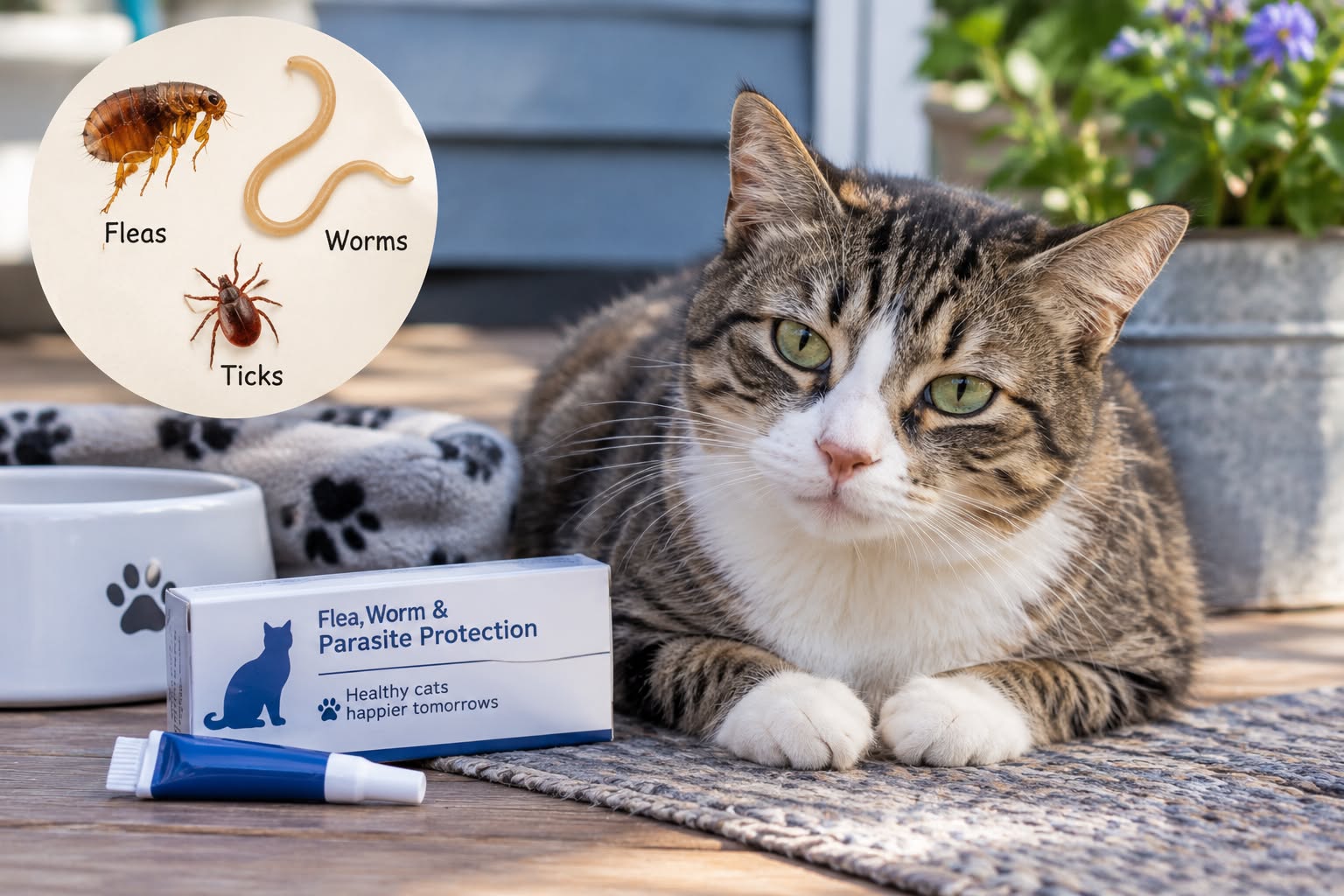
Fleas, worms and other parasites are something most cat owners will have to deal with at some stage. Even cats who spend most of their time indoors aren't completely protected.
Parasites can cause irritation, discomfort and, in some cases, more serious health problems. The good news is that with a little awareness and regular preventative care, many of these problems can be avoided or managed.
Let's look at some of the common ones and what you should know.
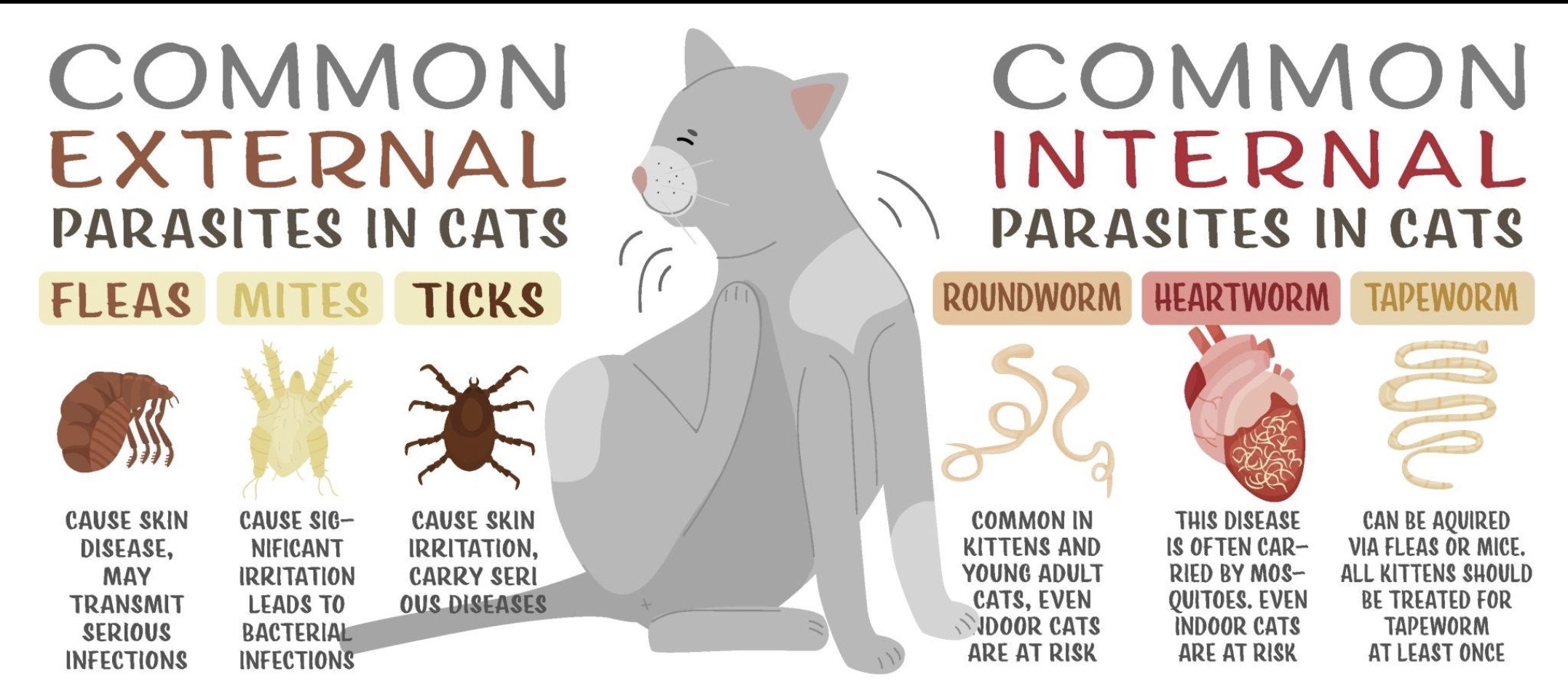
🐾 1. Fleas — those tiny little pests!
Fleas are one of the most common parasites affecting cats. They're small, fast-moving insects that live on your cat and feed on their blood.
You might notice:
Frequent scratching, biting or grooming.
Small scabs, particularly around the neck and base of the tail.
Hair loss or irritated skin.
Tiny black specks in your cat's coat, often called flea dirt.
Flea dirt is actually flea droppings. If you place some on a damp piece of white tissue and it leaves a reddish-brown stain, this can indicate fleas.
Can indoor cats get fleas?
Absolutely! Fleas can enter your home on other animals, clothing, shoes or visiting pets. Indoor cats aren't automatically flea-free.
What can you do?
Use a reputable flea treatment specifically designed for cats.
Treat regularly according to the product instructions and your vet's advice.
Wash your cat's bedding regularly.
Vacuum carpets, rugs and furniture, paying particular attention to places where your cat sleeps.
If you have several pets, ask your vet about treating all household animals appropriately.
One important thing: flea eggs and immature fleas can live in the environment, not just on your cat. Treating the cat alone may not solve an established infestation.
A very important warning: Never use a dog flea treatment on a cat unless a veterinarian has specifically confirmed it is safe. Some dog products contain permethrin, which is highly toxic to cats and can cause serious poisoning.
🐾 2. Worms — more common than you might think
Cats can pick up intestinal worms in several ways, including swallowing infected fleas, hunting prey, eating contaminated material or through their mother's milk when they're kittens.
The most common intestinal worms include:
Roundworms
These are particularly common in kittens. They live in the intestines and can cause a pot-bellied appearance, poor growth, vomiting or diarrhoea. Sometimes worms can actually be seen in vomit or faeces.
Tapeworms
Cats often acquire tapeworms by swallowing infected fleas or eating infected prey.
You may notice little segments around your cat's bottom or in their bedding. These can look rather like tiny grains of rice.
Hookworms
These attach to the intestinal lining and feed on blood. They can cause intestinal irritation, anaemia and weakness, particularly in kittens.
How do you prevent worms?
Use an appropriate cat worming product.
Follow the recommended treatment schedule for your cat's age and lifestyle.
Pay particular attention to kittens, outdoor cats and hunting cats.
Keep litter trays clean and dispose of faeces regularly.
Discuss an appropriate worming programme with your veterinarian.
Not all worming products cover all types of worms, so always check what the product actually treats.
🐾 3. Ear mites and other parasites
Fleas and intestinal worms aren't the only unwanted visitors!
Ear mites
These tiny parasites live in the ear canal and can cause irritation.
Signs can include:
Frequent head shaking.
Scratching around the ears.
Dark, crumbly discharge that can resemble coffee grounds.
Redness or irritation.
Ear mites are contagious between animals, so if you suspect them, have your vet check your cat.
Don't put household oils or random ear preparations into your cat's ears. The correct treatment depends on what's causing the problem.
Ticks
Ticks are small blood-feeding parasites that attach to the skin. Cats that spend time outdoors may occasionally pick them up.
If you find a tick, ask your vet about safe removal, particularly if you're unsure how to do it. Never apply chemicals or household remedies to try to make a tick detach.
🐾 4. What about kittens?
Kittens need particular attention when it comes to parasite prevention.
They can acquire worms from their mother, and flea infestations can be especially dangerous because young kittens have very little blood to spare.
A heavy flea infestation can cause anaemia, which can become serious very quickly.
Always use products suitable for the kitten's exact age and weight. Not every flea or worm treatment is safe for very young kittens.
Your veterinarian can recommend an appropriate preventative programme and explain when treatments should begin.
🐾 5. Choosing flea and worm treatments
There are lots of products available, including:
Spot-on treatments.
Tablets.
Oral liquids.
Flea collars.
Combined flea and worm treatments.
Some products cover several parasites, while others only treat one or two.
Before purchasing anything, check:
Is it specifically made for cats?
Is it suitable for your cat's age?
Is it suitable for your cat's weight?
Which parasites does it actually protect against?
How often does it need to be administered?
Is it safe to use alongside other treatments?
Don't assume that one product covers everything. A flea treatment doesn't necessarily treat intestinal worms, and a worming tablet won't necessarily protect against fleas.
If you're unsure, ask your vet or veterinary pharmacist.
🐾 6. How often should you treat your cat?
There isn't one universal schedule that suits every cat.
An indoor-only cat, an outdoor hunter and a kitten all have different parasite risks.
The appropriate frequency depends on:
Your cat's age.
Whether they go outdoors.
Whether they hunt or eat prey.
Whether they live with other animals.
The particular product being used.
Local parasite risks.
Your vet can help you work out a suitable preventative routine rather than treating blindly or unnecessarily.
🐾 When should you contact your vet?
Don't ignore persistent scratching, hair loss, skin irritation, diarrhoea or unexplained weight loss.
Seek veterinary advice if your cat:
Has a heavy flea infestation.
Develops pale gums, weakness or unusual tiredness.
Has persistent vomiting or diarrhoea.
Has visible worms or worm segments.
Is losing weight despite eating normally.
Has irritated or painful ears.
Seems generally unwell.
Young kittens and elderly or frail cats may need more urgent attention.
If you suspect a reaction or poisoning after parasite treatment, seek veterinary help immediately. Don't wait for symptoms to worsen.
❤️ A little Quiet Paws reminder
Parasite prevention is one of those basic parts of responsible cat ownership that is easy to overlook, particularly when your cat appears perfectly healthy.
I've cared for both indoor and outdoor cats, including rescue cats, and one thing I've learned is that just because you can't see a problem doesn't mean it isn't there.
Regular checks, sensible prevention and knowing what to look for can make a real difference to your cat's wellbeing.
And remember, you don't have to guess or try to diagnose things yourself. Your veterinarian is always the best person to advise on treatment and prevention.
The information in this article is based on general cat-care knowledge and personal experience. It is intended as a helpful guide, not a substitute for veterinary diagnosis or treatment.